THUNDERSTRUCKEN

“THUNDERSTRUCKEN” is a raw, emotionally charged confessional poem that blends self-deprecating humor, romantic collapse, and storm imagery into a voice-driven modern lament. The tone shifts fluidly between frantic regret, bitterness, vulnerability, and aching loneliness, creating the sense of a speaker unraveling in real time after a failed emotional confession or fractured relationship. One of the poem’s greatest strengths is its highly distinctive voice: conversational, profane, wounded, and darkly funny all at once. The imagery reveals both theatricality and genuine emotional exposure, giving the speaker an almost tragicomic dimension. The ending is especially strong, closing on quiet cinematic loneliness, transforming personal humiliation into a memorable tableau of abandonment and yearning. As a newly written poem for the “A Shattered Cup of Doom” novella, it has not yet been assigned to a chapbook.

“THUNDERSTRUCKEN”

lookit there,
it’s hope
i got it
strung up on a rope
i am a dope
a smitten fool
a thunderstrucken
fuckin’ ghoul
why not just let
well-enough alone
i had to stand up
on a wooden box and
commit my heart-felt
words to stone
i saw her frown
i’m such a clown
i let us down
i let us down
the thunder’s truckin’
through the skies
with teardrops
of a zillion eyes
that wash off
all uncertainty
romantic
hopeless clumsy
prematurity
what in hell’s
become of me
pain too great
time too long
now something sweet
and right and strong
has soured to weak
and woefully wrong
and i wait alone
in the light of the street
the moth it flutters
the cricket sings
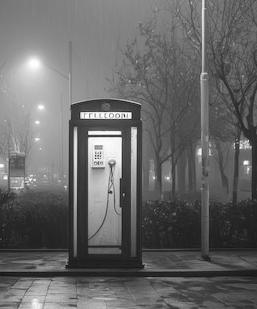
by a public phone
that never rings

Copyright © 2026 Robert Myrnyj | All rights reserved.
The poems and literary works presented here are original creations by the author.
Unauthorized copying, reproduction, distribution, modification, or public display of this
content is strictly prohibited without the prior written permission of the copyright owner.
THERE

“THERE” is a brief piece of confessional free verse that leans into psychological and existential poetry, using sparse language to convey emotional isolation and fractured identity. The tone is bleak, intimate, and quietly despairing, while the voice feels vulnerable yet emotionally restrained, as though the speaker can only approach their pain indirectly through metaphor. The poem’s greatest strength is its compression: in just a few lines, it establishes a powerful contrast between decay and emotional defense. Written for the “A Shattered Cup of Doom” novella, “Tome” appears in the “Second Shards of Broken Glass” chapbook.

“THERE”

i don’t know
my rotting flesh
from the armor
that i bear
my heart is locked
in a black box
and i don’t have
the key to there

Copyright © 2026 Robert Myrnyj | All rights reserved.
The poems and literary works presented here are original creations by the author.
Unauthorized copying, reproduction, distribution, modification, or public display of this
content is strictly prohibited without the prior written permission of the copyright owner.
STARS UPON THE NIGHT

“STARS UPON THE NIGHT” is a dark lyrical narrative poem that blends elements of confessional poetry, folk balladry, and Southern Gothic storytelling. The tone is mournful, suspicious, and emotionally bruised, carrying an undercurrent of betrayal that deepens as the speaker wrestles with a particular woman’s dishonesty and the collapse of trust. The voice is one of the poem’s greatest strengths: intimate, rhythmic, and musical, with the refrains giving the piece a song-like cadence that reinforces obsession and emotional fixation. The poem’s strongest qualities are its memorable repetition, evocative phrasing, and ability to sustain tension between accusation and uncertainty. Particularly effective is the contrast between cosmic imagery and raw colloquial bitterness, which gives the poem emotional texture and originality. As a newly written poem for the “A Shattered Cup of Doom” novella, it has not yet been assigned to a chapbook.

“STARS UPON THE NIGHT”

molly swore me to her secrets
and shackled to this dark request
i hear her
spinning gold, a treasure chest
of circumstantial evidence
i hear her

molly told me, but molly lied
she told me she told him goodbye
i saw what i saw, but still she denies
molly told me, but molly lied

what, by god, is wrung from right
how many tears to blur the sight
the fates pin stars upon the night
distant so, can’t taste the light

and even though she told me so
she has lost my trust, i fear
i keep her basted in my doubt
the things she wanted me to hear

molly, molly, sugar cain
she roams the darkest depths, unchained
what good a man, de-balled, de-brained
even she, herself can’t say

Copyright © 2026 Robert Myrnyj | All rights reserved.
The poems and literary works presented here are original creations by the author.
Unauthorized copying, reproduction, distribution, modification, or public display of this
content is strictly prohibited without the prior written permission of the copyright owner.
AFTERMATHEMATICS

“AFTERMATHEMATICS” is a confessional narrative poem blending neo-beat realism, dark lyrical storytelling, and contemporary tragic balladry. The poem’s greatest strength lies in its emotionally raw voice and its ability to balance intimate confession with mythic undertones. Through compact, conversational lines and recurring invocations, the poem creates the feeling of a witness account delivered somewhere between testimony, memory, and lament. Its language remains direct and unornamented, which gives the heavier subject matter a stark authenticity. Strong rhythmic repetition, internal rhyme, and spoken cadence give the piece the quality of a modern folk confession or underground torch song. The poem succeeds as a haunting meditation on trauma, intimacy, memory, and the difficult mathematics of human attachment. This poem is is included in the novella “A Shattered Cup of Doom.”, but is newly written and has not yet been assigned to a chapbook.

“AFTERMATHEMATICS”

molly swore me to her secrets
and dumps her mess with no regrets
i hear her
she lays a hand upon her chest
and by these truths she does attest
i hear her

molly told me that december
fire smoldered down to ember
when her man demand she sever
bastard child bond forever

what, by god, do mothers see
when cleavered clean from their baby
then in accord with destiny
aftermathematically
she left that man and turned to me

i know because she told me so
the numbers, names, her every tear
i could write a book about
the things she wanted me to hear

molly blue, the bitter queen
the darkness yet holds truths unseen
i wonder might there come a day
even she, herself can’t say

Copyright © 2026 Robert Myrnyj | All rights reserved.
The poems and literary works presented here are original creations by the author.
Unauthorized copying, reproduction, distribution, modification, or public display of this
content is strictly prohibited without the prior written permission of the copyright owner.
HELL AND EGYPT (REPRISE)

This poem, the continuation and stark follow-up to the longer “Hell and Egypt”, is likewise a lyric narrative within the gothic and confessional genres, having strong elements of ballad and theological complaint. Its central theme is the trafficking and abandonment of a child by a mother who herself had been sent off as a baby. It speaks subtly to the notion of generational curse under the horrible torrent of grave misfortune. Written for the “A Shattered Cup of Doom” novella, this poem appears in the “Second Shards of Broken Glass” chapbook.

“HELL AND EGYPT (REPRISE)”

she was sworn to not reveal
that she had been the devil’s whore
and so her wrath and agony
is shade upon the boy she bore

and so the shadow falls on him
she left him lying there alone
who allowed this to occur
she left her baby on the stone

she sold him off to hell and egypt
her running blood, her like, her kind
like some cold slab of bovine carcass
and she rode off, left him behind

she sold him off to hell and egypt

Copyright © 2026 Robert Myrnyj | All rights reserved.
The poems and literary works presented here are original creations by the author.
Unauthorized copying, reproduction, distribution, modification, or public display of this
content is strictly prohibited without the prior written permission of the copyright owner.

CAULDRON

This poem is a lyric narrative within the confessional and trauma poetry genres, with strong elements of gothic balladry. Its central theme is the aftermath of rape-induced pregnancy and the impossible choice forced upon a survivor who was left with child of her offender. The poem explores maternal sacrifice, theological rage, and the enduring, unquantifiable depth of suffering. The voice is a first-person confidant and witness, attentive, present, and ultimately humbled by the immensity of the struggle shared with him. Structurally, the poem employs a recurring refrain structure across five stanzas, with repeated lines creating a ritualistic, almost liturgical rhythm. Striking imagery abounds. The poem’s theological question hangs unanswered, reinforcing the speaker’s helplessness. This poem is is included in the novella “A Shattered Cup of Doom.”, but is newly written and has not yet been assigned to a chapbook.

“CAULDRON”

molly swore me to her secrets
draws the curtain to confess
i hear her
pandora opens up her chest
and tries to bring her heart to rest
i hear her

molly told me that november
that her soul became dismembered
when the savage ravage rendered
her with child of her offender

the bird gets worse, the more it sings
a mother forced to cut her strings
to leave her own to what fate brings
what kind of god would do these things

i know because she told me so
the numbers, names, her every tear
i could write a book about
the things she wanted me to hear

molly the princess of pains
the darkness of those days remains
how deep the cauldron of her bane
even she, herself can’t say

Copyright © 2026 Robert Myrnyj | All rights reserved.
The poems and literary works presented here are original creations by the author.
Unauthorized copying, reproduction, distribution, modification, or public display of this
content is strictly prohibited without the prior written permission of the copyright owner.
HELL AND EGYPT

This poem is a lyric narrative within the gothic and confessional genres, with strong elements of ballad and theological complaint. Its central theme is the trafficking and abandonment of a woman, the subsequent shattering of her faith, and her defiant but self-destructive turn toward forbidden love. The poem also explores inherited trauma and the seemingly unanswerable question of why darkness befalls the innocent. The voice is a third-person omniscient narrator who shifts between anguished witness, theological interrogation, and tragic chronicler of the woman’s internal collapse. Structurally, the poem unfolds across eight stanzas of irregular length, mixing quatrains and couplets. Repetition of key phrases creates a refrain-like meditation on desire, suffering, and divine silence. The title phrase suggests both a literal place of exile and a biblical resonance, with Egypt as the land of bondage and hell as ultimate abandonment. The woman’s rejection of God and her choice to lie beside “a priestess of deceit” frames her rebellion as both liberation and damnation, symbolized by quicksand imagery. Written for the “A Shattered Cup of Doom” novella, this poem appears in the “Second Shards of Broken Glass” chapbook.

“HELL AND EGYPT”

they sold her off to hell and egypt
her running blood, her like, her kind
like some cold slab of bovine carcass
and they rode off, left her behind

who set her naked on the stone
and who allowed this to occur
who left her lying there alone
why did this shadow fall on her

and what, dear lord, in darkness breeds
the heart it wants and the heart it needs

she swore to hell and heaven then,
with hand on heart, forevermore
that this would never be as such
no not again, no never more

and so forwent, and then she severed
whatsoever ties and binds
even unto god most high
and then, again, and for all time

for he allowed this woe to be
who tames the storms and calms the seas
they say he sees our darkest thoughts
and hears our cries, our prayers, our pleas

but she chose not their ancient one
in vain, she deemed him obsolete
and chose instead to lie in bed
beside a priestess of deceit

but the moonlight whispers marking time
the quicksand of her very sin
and though the kicking of her legs
she drifts and sinks much deeper in

she was sworn to not reveal
that she had been the devil’s whore
and so her wrath and agony
is shade upon the boy she bore

the heart it wants and the heart it needs
but what, dear lord, does darkness breed

Copyright © 2026 Robert Myrnyj | All rights reserved.
The poems and literary works presented here are original creations by the author.
Unauthorized copying, reproduction, distribution, modification, or public display of this
content is strictly prohibited without the prior written permission of the copyright owner.

IRON MAIDEN

This poem is a lyric narrative in the confessional and trauma poetry genres, with gothic undercurrents. Its central theme is the aftermath of sexual violence and the profound, shattering psychological damage inflicted upon a survivor. The poem also explores the role of the empathetic witness who bears the weight of her confession. The voice is a first-person confidant and listener. This speaker is compassionate, physically attuned to the distress, and ultimately resigned as helpless to wash away the stain of what occurred. Structurally, the poem uses a repetitive, chant-like form across five stanzas, with recurring lines that create a ritualistic, almost mournful incantation. The closing stanza acknowledges the limits of healing: The title, “IRON MAIDEN,” creatively evokes both the medieval torture device and an image of a heart turned into a locked, punishing cage. Written for the novella “A Shattered Cup of Doom,” “Iron Maiden” is newly produced has not yet been assigned to a chapbook.

“IRON MAIDEN”

molly swore me to her secrets
i give my best and nothing less
i hear her
her heartbeat staggers in her chest
a shimmery star amulet
i hear her

molly told me that october
a horrid tale she won’t get over
how once a stranger got to know her

what, by god, might a heart do
iron fisted, torn, abused
overdriven insane, bruised
what, by god, might a heart do

i know because she told me so
the numbers, names, her every tear
i could write a book about
the things she wanted me to hear

molly, molly, made insane
the darkness of that night remains
how many tears might lift the stain
even she, herself can’t say

Copyright © 2026 Robert Myrnyj | All rights reserved.
The poems and literary works presented here are original creations by the author.
Unauthorized copying, reproduction, distribution, modification, or public display of this
content is strictly prohibited without the prior written permission of the copyright owner.
CHURCH TO ME

“Church To Me” is a lyric poem with strong elements of spiritual skepticism and romantic devotion, blending confessional and secular hymn traditions. Its central theme is the replacement of institutional religion with a beloved person as the locus of transcendence, grace, and moral reckoning, without requiring faith in God, heaven, scripture, or organized worship. The voice is a first-person speaker who is unapologetically flawed, agnostic, and self-deprecating, yet experiences the beloved as a sacred presence. Structurally, the poem uses a repeated refrain across five quatrains, each rejecting a traditional religious element before affirming that the woman’s supernatural quality provokes the same awe, sanctuary, and moral gravity as church. The language is plain, rhythmically steady, and undercut by earthy imagery that grounds the spiritual claim in bodily, lived experience. Written for the “A Shattered Cup of Doom” novella, this poem appears in the “Second Shards of Broken Glass” chapbook.

“CHURCH TO ME”

i don’t pretend to be an angel
i’ve done my share of evil deeds
but something in her, supernatural
seems so much like church to me

i don’t intend to go to heaven
just roll my carcass to the street
but something in the air about her
seems so much like church to me

i don’t depend upon some jesus
cannot believe what i can’t see
but something in her eyes, like lightning
seems so much like church to me

i don’t attend saint paul’s on sundays
i naturally just oversleep
but somehow she’s my sanctuary
seems so much like church to me

i can’t defend the holy bible
i cannot reckon what it means
but something singing in her whisper
somehow seems like church to me

Copyright © 2026 Robert Myrnyj | All rights reserved.
The poems and literary works presented here are original creations by the author.
Unauthorized copying, reproduction, distribution, modification, or public display of this
content is strictly prohibited without the prior written permission of the copyright owner.

TIME AND TIME AGAIN

This poem is a lyric poem, with strong elements of confessional and gothic poetry. Its central theme is the cyclical nature of suffering and redemption—specifically, the journey from suicidal despair and imprisonment toward spiritual rescue through love. The voice is a first-person speaker, who oscillates between raw anguish and hard-won salvation. Structurally, the poem uses stark rhyme, repetition, and fragmented imagery to mimic obsessive thought and emotional relapse. A new work, “Time And Time Again” is not yet assigned to a chapbook.

“TIME AND TIME AGAIN”

the darkest night of all my days
mousetrap house rat in a maze
some angel shoulder old crow sings
one-eye jack go suicide king

the knight is still without the moon
lately death can’t come too soon
an ounce of cure, a pound of rock
beat the dead horse, beat the clock

marking time and time again
i’m living hell and back again
again and again
and again
again

the prison gate reverberates
scared straight date where fate awaits
lightning striking, hallowed hall
shadow creeping up the wall

she sat beside me on death row
her eyes a blue electric glow
my heart plugged into supercharge
the second hand remains at large

travel time and time again
i’m back from living hell again
again and again
and again
again

she stood to rise and took my arm
and led my spirit clear of harm
due time done did doing time
a simple love, a simple rhyme

energized amazed enthralled
her picture nailed onto the wall
the undeath of the valley stir
every time i think of her

Copyright © 2026 Robert Myrnyj | All rights reserved.
The poems and literary works presented here are original creations by the author.
Unauthorized copying, reproduction, distribution, modification, or public display of this
content is strictly prohibited without the prior written permission of the copyright owner.

FOR GOD AND FOR DEVIL

“For God and For Devil” is a narrative poem with a dash of Americana noir and a hint of Gothic undertone. It is, perhaps, an inverse of Romantic poetry, but its conceptual base is the question of propriety in the face of wickedness expressed in something of a confessional spirit. As such, the work provokes existential contemplation and draws elements of morality into the scope. “For God and For Devil” is a snapshot in the “A Shattered Cup of Doom” realm, and released as part of the “Second Shards of Broken Glass” chapbook.

“FOR GOD AND FOR DEVIL”

i.

jukebox booth sunrise diner
we are two of a kind
detectives and suspects alike

same damned light, same damned crime
snarling wolves, bone to grind
and it feels like the end of the line

there once was a girl
who showed up at midnight
every night, many months, her and me

and there once was another,
taken in by his mother
as daughter, he cried, family

ii.

so i told him the truth
and i showed him the proof
his lip quivered and a tear filled his eye

such things cannot be
if our eyes cannot see
so he lies, to himself, so he lies

as i was so compelled
to breaking her spell
i laid it out, science and art

i did her so wrong and
it serves her so right
with a stake driven into her heart

iii.

but what kind of fool
must believe in his mind
the tales of a whore to survive

he is weak, worn, and tired
yet as fool and as liar
that man is far greater than i

so i leave him for midnight
alone in the moonlight
blood in my teeth, thorns in my hide

what becomes of a man
when you’ve done all you can
is for god
and for devil
to decide

Copyright © 2026 Robert Myrnyj | All rights reserved.
The poems and literary works presented here are original creations by the author.
Unauthorized copying, reproduction, distribution, modification, or public display of this
content is strictly prohibited without the prior written permission of the copyright owner.

EMPTY CHAIR

Originally conceived of in 1995, “Empty Chair” is a reduced and revised version of an unreleased work called “Silhouette”. The poem serves the “A Shattered Cup of Doom” novella as a piece of the back story of the narration character, a great woe on one man’s failure to lift off and gain traction into adulthood. “Empty Chair” is a Dark Confessional poem that occupies deep depression both in word and in structure. Trigger Warning: This poem whispers of soliloquy, therefore, the reader should proceed with caution.

“EMPTY CHAIR”

in a lonely room
in an empty chair
alone in the silence
i sit there and stare
it’s all the same day after day
month upon month
since we’d last parted ways
from the brightest of hopes
to the darkest of days

i woke up this morning
i wanted to die

in a lonely room
in an empty chair
alone in the silence
i sit there and stare

alone in the silence

it’s all the same mold and decay
time after time
the damn nightmare rewinds
an american dream that
the world left behind

i woke up this morning
i wanted to die

in a lonely room
in an empty chair
alone in the silence
i sit there and stare

alone in the silence

it’s all the same white picket brain
wave upon wave of
infectious rejection
suspension detention
the dungeon of death

i woke up this morning
i wanted to die

in a lonely room
in an empty chair
alone in the silence
i sit there and stare

alone in the silence

it’s all the same young and insane
over and over, will this ever end
from my mother’s basement
to be born again

i woke up this morning
i wanted to die

Copyright © 2026 Robert Myrnyj | All rights reserved.
The poems and literary works presented here are original creations by the author.
Unauthorized copying, reproduction, distribution, modification, or public display of this
content is strictly prohibited without the prior written permission of the copyright owner.